PAST NEWS  2011 | 2010 | 2009 | 2008 | 2007 | 2006 | 2005


12 July 2011

Orana Wildlife Park Staff Devastated by Loss of Giraffe Calf

Orana Wildlife Park regretfully advises that two month old female Giraffe calf, Savannah, passed away on Saturday. Keepers found the young calf collapsed in the morning and the vet provided initial treatment. Sadly Savannah continued to deteriorate through the day and the decision was made to humanely euthanase her. The post mortem shows the cause of the problem was an untreatable abdominal stomach ulcer.


TOP


2 May 2011

Giraffe Calf a Double Surprise for Park Staff

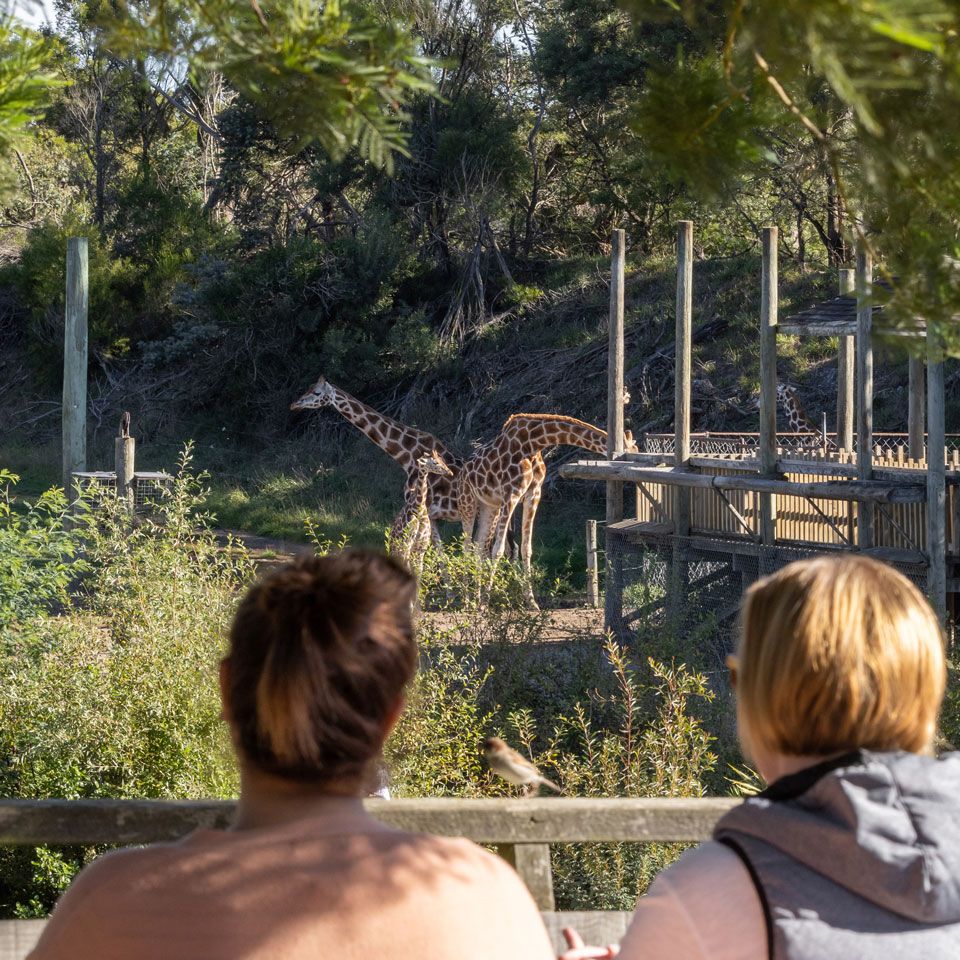
Yesterday morning, Orana Wildlife Park staff arrived at work to find that Giraffe Tunu (7) had given birth to her first calf! Whilst keepers were aware that she was pregnant, staff were expecting her to birth mid May. Harold (18) is the father of the new calf.

Animal Collection Manager, Ian Adams, says: "It was fantastic to come to work and find that we had a perfectly healthy calf born overnight. When Giraffes give birth during the day it is very stressful for staff as they await the arrival of the calf. There were no signs even on Saturday night that Tunu was ready to birth - they normally go quiet and don't eat before the birthing process starts."

"We did have some concerns yesterday as it took the calf a long time to feed from Tunu. But over the course of the day, Tunu became more relaxed which meant the calf could feed well and everything is fine now."

"We are also delighted that Tunu has produced a female calf. The baby is just the second female Giraffe born at the Park in fourteen years! In total, Harold has sired eleven calves and the latest is only his second girl."

Tunu was transferred to Orana in 2005 from Melbourne Zoo where she was born. "Compared to our other two females, Nathalie and Zuri, Tunu is a bit more nervy. We had been concerned about how Tunu would progress considering it was her first pregnancy. However, she has done a great job."

"This little girl is absolutely beautiful and visitors will enjoy meeting her. We are thrilled that another female has been born as in time she will make a valuable contribution to the zoo-based breeding programme for her species" concludes Ian.


TOP


20 April 2011

End of an Era for Orana's Big Cat Keeper

From hand-raising day old Cheetah cubs to travelling across the Nullarbor desert with two White Rhinos bound for Christchurch, Graeme Petrie has a job that many people would dearly love. But Friday is the end of an era as Graeme leaves his position of Head Keeper of Exotic Mammals at Christchurch's Orana Wildlife Park to seek new adventures overseas.

Graeme has spent 20 years working in the captive industry, initially joining a wildlife centre in North Queensland where he worked with Koalas. In 1995, he moved home to Christchurch and the following year took a position working with Lions, Tigers, Cheetah and other carnivores at Orana Wildlife Park. Over the past decade he has held his current position as head of the exotic mammal section, meaning he oversees animal keepers and works with over 20 animal species.

Reflecting on his fifteen years at the Park, Graeme says he has numerous career highlights and some great work stories. "I have many fond memories of my time at Orana. This role has been a life changing experience and it has been an absolute privilege to have worked with some of these very rare exotic animals in my home town. I have lived on-site for fourteen years so it will be strange when that ends."

"When I started, the Park was in a difficult financial situation so it has been great to watch it grow from strength to strength over the years."

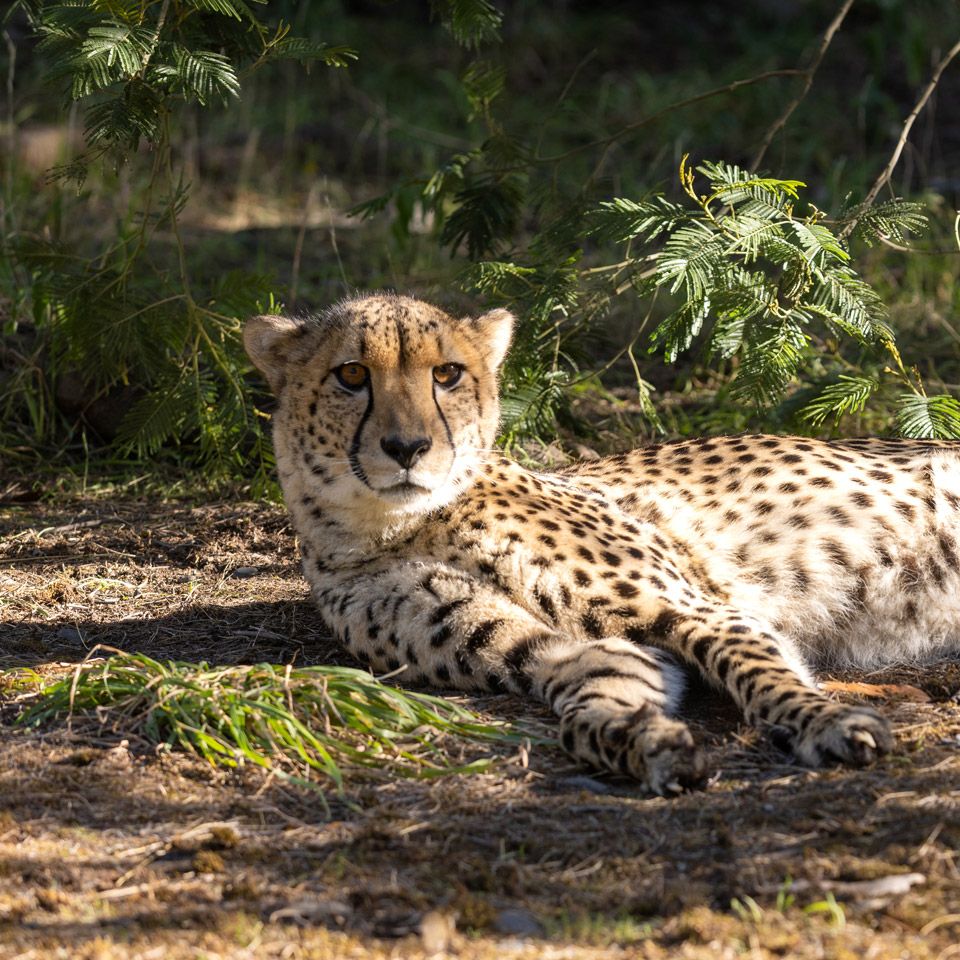
Graeme says one of his most memorable experiences was the birth of three Cheetah cubs in 1997: "These were the first cubs born during my time at the Park. It was a great achievement for the Park considering Cheetah are so difficult to breed in captivity. From that litter, it has been great to see many more Cheetah cubs born at Orana over the years."

Animal transfers are a regular occurrence for Orana as the Park fulfils an important role in international zoo-based breeding programmes. "I have been fortunate to have been involved in numerous transfers over the years. Some of the most memorable include: moving two Rhino from Perth to Christchurch in five days, sailing across the Tasman taking a Giraffe to Melbourne, moving a Rhino calf born at Orana to South Australia, going to Dubbo (near Sydney) to bring two Tigers to their new home at Orana, moving two male Lions from Wellington, shifting Wild Dogs to Hamilton and transferring Cheetah from the North Island to Christchurch."

"I have also enjoyed talking to interested members of the public and helping to spread the word about our conservation work and what visitors can do to help."

"Living on-site has given me many other opportunities. I have been lucky to be able to spend a great deal of time with the animals after hours. I would often visit my Giraffe mates, see the Rhinos and hang out with the Lions, Tigers and Cheetah. This helped build strong bonds with many of the animals; the animals become your friends over time. It has been amazing to see an animal born here mature and eventually have kids of their own."

Four animals with which Graeme has developed a particularly strong bond with are Shomari, Cango, Kunjuka and Mazza - the Cheetah that he helped to hand-raise two years ago. "The cubs' mother was an inexperienced first time mum and left her youngsters. Had we not intervened and hand-raised them, they would have died. During the cubs' first six weeks of life myself and another keeper worked a 12 hour day, 7 days a week, tending to the needs of the cubs. Our roles included feeding, cleaning and toileting the animals as well as carefully monitoring their growth rates. Effectively I was their 'dad' for two years so I will be sad to move away from them. However it has been a pleasure to see them grow up and hopefully in time they will make a contribution to the preservation of their species."

Graeme admits that not all aspects of the job have been easy. "I guess the down side of the role is that you lose some of your animal friends. To a degree you become hardened to animals passing, as it is the nature of our industry, but it is sad when they die."

Orana Wildlife Trust Chief Executive, Lynn Anderson, says "Graeme has made a valuable contribution to the development of the Park. We will miss him sincerely. He has been a key member of our team and an influential decision maker. In particular he will be remembered as 'Mr Cheetah' having had such an association with the species during his time at Orana. We wish him all the best for his travels."

Looking to the future, Graeme is excited by the prospects of travelling overseas. "Outside of work my passion is my camera and large birds of prey, so I will first be heading to the UK and see how things go from there."

"I have been very fortunate to have had such a fantastic job for so many years and would like to thank the Trust for the opportunities that I have had. I wish them all the best for the future" concludes Graeme.


TOP


19 April 2011

Canterbury Kiwi Moves to Coast

This morning another Canterbury resident will moved out of town. Ruwhenua, a seven month old female Kiwi, was transferred from Orana Wildlife Park to Hokitika's National Kiwi Centre. There she will be a companion for Parawai, an 18 month old male and together they will fulfil a conservation advocacy role as part of the captive component of the Recovery Programme.

Acting Head Keeper of Native Fauna, Alyssa Salton, says Ruwhenua has been a great animal to work with: "She is a nice wee Kiwi and was one of the first to hatch at the Park in many years. She is a hassle free bird and whilst we will miss her, this transfer helps to free up space at Orana for future chicks and will also mean she is a great companion for Parawai."

Ruwhenua, meaning shaky ground or shaking of the land, hatched at the Park two weeks after Christchurch's 7.1 magnitude earthquake. "As an egg Ruwhenua was rocked about inside the incubator during the earthquake but miraculously still hatched. However, she did attempt to hatch at an awkward angle, putting her foot through the end of the egg, instead of the middle. We had to apply a bandage around the egg, to enable her to push against the padding. Then we removed some shell at which point she gained sufficient energy to break free. Since then she has flourished and is a very healthy Kiwi."

Kim McPherson, Manager of The National Kiwi Centre, was excited about the imminent arrival of Ruwhenua: "It is an absolute privilege to be receiving such a special little girl. Parawai will no doubt be very curious about what is on the other side of the enclosure and will spend a bit of time "investigating" the new smell. In the coming months this will be the first time that Parawai will have had the opportunity to roam with another Kiwi and we are very excited about that."

"For the past year Parawai has been living beside his big sister Kura a four and half year old female. Last October we noted that Parawai began to walk strangely. On inspection there was nothing obvious but an x-ray revealed that Parawai had a very rare bone disorder, normally found in farmed Emu, where one leg grew faster than the other. Parawai spent two and half months at Massey University Wildlife Hospital where he had a full leg reconstruction (his leg was broken and a piece of bone taken out and then the leg was put back together). He returned at the beginning of January and is now a happy little Kiwi" adds Kim.

Ruwhenua's transfer takes Orana's Kiwi population to thirteen animals, two of which reside in the Nocturnal Kiwi House display (the daily public feed is 1.30pm daily). The Park has five breeding pairs of Kiwi and one animal is currently housed alone. "Whilst Ruwhenua is leaving the Park, visitors still have ample opportunity to view Kiwi here, along with our wide range of other native species" adds Alyssa.

Orana's Chief Executive, Lynn Anderson, adds: "Whilst the Park has been fortunate to re-open after February's devastating earthquake with very minimal material damage, it is a difficult time for everyone at present. From our perspective, visitor numbers have dropped significantly since the quake. People can help us by visiting the Park; the school holidays are a great time to visit as we are currently providing a special deal whereby children enter for half price admission."

Ruwhenua and Parawai are both Brown Kiwi, though of different provenance. Brown Kiwi are classified as Nationally Vulnerable by the Department of Conservation. People can help wild Kiwi by being more aware that dogs kill the birds and hence need to be controlled in Kiwi habitat.


TOP


06 April 2011

Cute Cubs Emerge at Orana

Orana Wildlife Park staff are delighted to announce that two delightful, thirteen week old, Lion cubs will soon make their first public appearance. The male cubs are due for their flu vaccination tomorrow morning and once they are inoculated the cats will be able to venture outside and on public display (subject to fine weather).

Animal Collection Manager, Ian Adams, is thrilled with the progress of the cubs and their mother, Meeka, who is a first time mum: "The cubs are little characters and have each developed quite an assertive attitude which is important for little Lions to survive and thrive. Meeka is proving to be a fantastic mother and is very protective of her babies. She is feeding her cubs well and the youngsters are now beginning to eat meat!"

"Meeka has been separated from her pride of three other Lions for the past few months to nurse her cubs in a quiet, isolated area. Once the cubs have been inoculated, we can move them on public display and start preparations to fully integrate Meeka (and the cubs) back with the other Lions to create a pride of six cats."

The father of the cubs is a cat named Malik and he was transferred to Wellington Zoo prior to Christmas. Malik and his brother Zulu spent two years at Orana Wildlife Park on a breeding loan from Wellington as part of the zoo-based breeding programme for the species.

"The breeding loan was a unique way to manage the species and it proved to be very successful for the Park. Malik sired a total of seven cubs to three different lionesses and ended a six year gap between the births of Lion cubs."

Orana now manages two Lion prides, the largest of which numbers nine cats (including five of Malik's juvenile cubs) making the Park's unique Lion Encounter, where visitors travel through the Lion habitat on a modified vehicle, an even more impressive experience! "Orana has always been associated with these majestic big cats and our aim has been to progressively build up two large Lion prides to replicate their living situation in the wild. The latest cubs are a fantastic boost to our animal family and I am sure people will delight in meeting them" says Ian.

Orana's Chief Executive, Lynn Anderson, adds: "Orana Wildlife Park has been extremely fortunate to re-open after February's devastating earthquake with very minimal material damage. However it is a very difficult time for everyone at present. From Orana's perspective, our visitor numbers have dropped significantly since the quake. Therefore the fact our Lion cubs can now move on public display is positive for us and demonstrates that our team is determined to get the Park through this time."


TOP


03 January 2011

Banding Birds

Orana Wildlife Park native fauna staff are busy tending to the needs of a range of native youngsters. These include six Brown Teal ducklings (that are about to be transferred to Peacock Springs, Christchurch, before being released to the wild), the recent arrival of a young Blue Duck breeding pair and a 23 day old Kiwi chick that had a major operation prior to Christmas.

Native Fauna Head Keeper, Tara Atkinson, says her team are delighted with the breeding success of late: "We are extremely busy at the moment, which is a good thing because we are working with a range of young animals that are all part of zoo-based breeding programmes and/or Recovery Programmes."

This week, staff are focussing on four delightful young Yellow-crowned Kakariki chicks. Staff need to catch the birds, before they fledge, to sex them and band the animals for identification purposes.

"The Kakariki chicks are delightful birds and we are thrilled to have produced Yellow-crowned chicks again. We bred two chicks in 2009 but prior to that, it had been many years since Orana had bred these beautiful birds. It is imperative that we catch them now before they leave the nest box and fledge, as it is far more stressful on the birds having to catch them when they can fly."

"Kakarikis are beautiful little birds and they won Forest and Bird's bird of the year poll for 2010. Sadly, these native birds were once widespread in New Zealand. Whilst classified as Not Threatened, they now only occupy part of their former range so (aside from viewing them at a place like Orana) it seems we need to go 'off the beaten track' to see some of our more 'common' native birds. Threats to these beautiful birds include predation and habitat loss so it is important captive centres breed these animals and give people the chance to see them."


TOP