

PAST NEWS  2010 | 2009 | 2008 | 2007 | 2006 | 2005
2 November 2007

Animal Babies at Orana

Twin Ringtailed Lemurs and a baby Waterbuck are the latest
additions to Orana Wildlife Park 's animal family.

Orana Wildlife Park 's primate keepers received a doubly special surprise at the end of September - the discovery of twin Ringtailed Lemur babies. The birth of the primitive primates was unexpected as Matt, the Park's only male Ringtailed Lemur, was transferred to Australia Zoo in July. Orana now has a group of eight of these hyperactive animals.

"Not knowing mum was pregnant, we were delighted with the arrival of these cute twins. The babies spend most of their time clinging tightly to their mother, whilst she leaps through the trees but will soon start venturing out on their own" says Animal Collection Manager, Ian Adams.

The Park is part of a managed captive breeding programme for the species, classified as vulnerable by the World Conservation Union. Over the past five years, five babies have been born. Before the Park is able to import another male, a third Lemur island will be created and two more houses will be developed. Park visitors will have the chance to enter a competition to name the baby Lemurs.

A Waterbuck baby was also born in September and is now regularly seen on display. Orana transferred the baby's parents in 2004 and now has a display group of six of these striking creatures. Orana is one of the only zoos in Australia to hold these animals.

"The Waterbuck calf is very strong. We don't know the sex yet - these animals are too dangerous for us to enter their habitat, but the youngster is thriving. Spring is such a fantastic time of year because the Park is buzzing with activity. There are nesting native birds everywhere and the Waterbuck calf and Lemur babies add a nice exotic mix to the new babies this season" adds Adams.

TOP

1 November 2007

Boy Racers Threaten Wildlife

Regular burnouts close to Orana Wildlife Park pose a risk to the precious animals.

Orana Wildlife Park staff members are concerned by the increasingly close proximity of boy racer activity to the Park and the regularity of this behaviour. Burnouts occur most Friday and Saturday nights about 400 metres from the entry to Orana Wildlife Park .

"The noise they make at night causes immense stress to our animals, their entire activity poses a serious fire risk to us (flares, oil and hot rubber are not a good mix with endangered animals) and the mess they make is disgusting" says Animal Collection Manager, Ian Adams.

As a result of boy racer activity, a frightened Kangaroo injured ligaments and tendons in its hind leg. The animal had to be anaesthetised and taken to the Park's vet at Rangiora for x-rays.

"Thankfully the Kangaroo has recovered but had we needed to operate it would have cost us more than $4,000. Animal welfare is our primary concern and this incident resulted from silly behaviour and simply wasted our time while causing a painful injury to the animal" adds Adams .

The road near the Park is a mess with debris from the boy racer activity. Oil slicks and rubber saturate the tarmac and staff have found used flares, cigarette butts and rubbish meaning the activity poses a huge fire risk to the Park and the surrounding area. Furthermore, the road looks filthy which is a terrible sight for people visiting one of Christchurch 's major assets.

Chief Executive, Lynn Anderson says "We implore the boy racers to have more consideration for the animals. Our animals are frightened and startled by the loud noise in the middle of the night and more injuries or even deaths to our animals could result if this continues. Most are precious endangered species that are part of international conservation breeding programmes and they are irreplaceable."

TOP

19 October 2007

Lots of spots at Orana

Four more Cheetah have recently been transferred to Orana Wildlife Park !

Orana Wildlife Park 's Cheetah breeding programme has received a significant boost with the recent arrival of four of these beautiful cats (two males and two females) - Orana now holds eleven Cheetah. The animals were transferred from Hamilton Zoo and Cango Wildlife Ranch ( South Africa ) as part the Australasian Species Management Programme (ASMP).

"Cheetah are a flagship conservation species at Orana and to date eleven of these highly endangered cats have been raised to adulthood. The new animals are crucial to our ongoing involvement in the breeding programme" says Head Keeper of Exotic Animals, Graeme Petrie.

Two of the cats, Kaitoa (male - 10) and Temba (female - 7), were transferred from Hamilton Zoo. Kaitoa was born at Orana so keepers are pleased to have the chance to work with him again. Gizmo (male) and Gemma (both 10 months old) were transferred from Cango Wildlife Ranch. These two animals are the offspring of Cheetah that were caught from the wild in Botswana (due to conflicts with farmers) and are therefore totally unrelated to any of the other Cheetah in this part of the world meaning they are very important animals for the breeding programme in Australasia.

"The Park is one of only a small number of institutions worldwide that have experienced repeated breeding success with Cheetah - a species that is notoriously difficult to breed in a captive setting. Much of our success is attributed to the wide open spaces at the Park which allow the females to generally be solitary, as they are in the wild" adds Graeme.

The international captive breeding programme is crucial to ensure the future survival of Cheetah, classified by the World Conservation Union as vulnerable due to the many threats they face in the wild including habitat loss, hunting by humans for their pelt and persecution by farmers due to stock losses. The breeding programme is scientifically managed to ensure genetic diversity is retained so that the animals are strong, fit and healthy. As Cheetah get pushed closer to extinction in the wild it is exceptionally important that the world's zoos manage this critical back-up population to the highest standards as re-introductions to the wild (in areas of protected habitat) are a real possibility for the future.

" Orana Wildlife Park operates as a charitable trust and relies entirely on outside funding to secure the funds required to enable important animal transfers to proceed. We take this opportunity to sincerely acknowledge grants from the Josef Langer Charitable Trust and the Eureka Trust that enabled us to transfer these Cheetah" says Chief Executive, Lynn Anderson.

Park visitors have the unique opportunity to witness the blistering speed of the Cheetah (the world's fastest land mammal) during a daily exercise regime where our cats chase a lure down their 180 metre long exhibit in under 13 seconds!

TOP

24 July 2007

Farewell to Lion marks end of an era at Orana 

Orana Wildlife Park 's last Lion from the drive through reserve days died on Friday.

Orana Wildlife Park staff and volunteers were saddened by the loss of Tarma, a 19 year old male Lion, last week. Tarma was euthanased owing to age related illness. His passing signals the end of an era at Orana Wildlife Park as Tarma was the last surviving member of the Park's drive through Lion reserve pride.

"Tarma was a great animal to work with and lived a fairly long life at the Park. It was a tough decision for our team to make, but animal welfare issues are of the highest concern and we made the right call regarding Tarma. It is very sad that he has gone though" says Animal Collection Manager, Ian Adams.

The drive through Lion reserve was the first and only one of its kind in New Zealand and operated from 1976 to 1995. Nowadays, the Park offers the unique Lion Encounter, a daily experience enabling visitors to travel through the Lion Reserve on board a specially modified vehicle.

"Tarma was involved in both the drive through Lion Reserve and our Lion Encounter. Due to the close up nature of these experiences, Tarma played a key role in attracting visitors to the Park and raising awareness on the plight of his wild cousins. We all have many stories of the drive through days such as tyres being bitten, mudflaps being taken, window wipers being pulled off and Lions denting bonnets" adds Mr Adams.

New Lion facilities, including a second large reserve and a new den complex, will be completed this year and will change the way the Park manages its two Lion prides. The den building will be lighter and warmer for the animals and easier for keepers to operate whilst providing more viewing opportunities for visitors, including behind the scenes tours. As a charitable trust, the Park separately fundraises for all new developments.

We thank the Eureka Trust, Canterbury Community Trust, Josef Langer Charitable Trust, Dr L Story, R and S Baldwin and the many organisations and donors who contributed towards the Lion project.

"I guess that Tarma's passing really does signal the end of an era for Orana - he was the last cat associated with the drive through Lion reserve and this year we will finish new Lion facilities for these mighty animals. We will all miss Tarma dearly though" says Mr Adams.

Lions used to range throughout Africa and Eurasia but outside Africa only India 's Lions have survived. Their numbers are declining due to habitat loss and poaching and the World Conservation Union (IUCN) classifies the species as vulnerable.


20 July 2007 

To the delight of visitors, Orana Wildlife Park 's Tigers
have taken to climbing a 6 metre high post

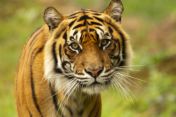
The sight of a 120kg Tiger effortlessly leaping up a 6 metre high post provides a thrilling encounter for visitors to Orana Wildlife Park . A new Tiger Habitat was opened in November and features three separate enclosures for the Park's Tiger brothers 'Sendiri' and 'Dumai'. A range of different environmental stimulants (such as the high post) are provided in the exhibits which are utilised by animal keepers during the daily feed demonstration at 11.30am .

"The daily feed enables us to convey key conservation messages about the species whilst showing off the power, strength, speed and agility of the animals. People are amazed to see the Tigers race up the pole, but we don't always place meat there because we need to provide variety for the animals" says Head Keeper of Exotic Animals, Graeme Petrie.

The Park's three exhibits enable staff members to offer a different Tiger feed demonstration for visitors on various days which is especially important for repeat visitors. For example, in the south exhibit visitors may see the Tigers leap up the high post. In the middle exhibit visitors have a view through glass of the Tigers racing towards them. In the north exhibit visitors see Tigers leaping up to five metres across high stumps to get their meal.

"The Tiger habitat works really well for us - the cats are kept stimulated through a constantly changing environment and visitors have the chance to see the Tigers being active in different ways on various days which helps to enhance their Orana visitor experience whilst gaining an appreciation of the beauty of Tigers" says Mr Petrie.

The Tigers have been a popular addition to the Park and the daily feed provides visitors with another amazing wildlife encounter to complement the range of unique close up animal feeds on offer every day at Orana Wildlife Park . Staff are thrilled with the return of the Tigers and that the animals have settled in extremely well - the latest spell of cold weather has not even affected them!

"People often wonder how our animals cope with the cold weather in winter - especially the animals from overseas like Tigers. All our animals are fed well, have nice warm shelter and bedding and some of them have heated housing" adds Mr Petrie.

Tigers at Orana

Tigers are a critically endangered species. The Park is part of global network of institutions involved in the captive breeding programme for these animals and is associated with the 21 st Century Tiger Campaign. Orana is currently a holding institution for Sumatran Tigers, the smallest subspecies, which number less than 500 in the wild. As a holder, the Park advocates for the conservation of these animals. In the future, Orana may acquire a female for breeding.


10 May 2007

Mum’s Gone Wild!

With Mother’s Day looming, Orana Wildlife Park staff have taken
time to acknowledge their range of animal mothers.

Orana Wildlife Park has a wide variety of wonderful animal mothers and many of them publicly display their amazing maternal instincts for visitors to observe. “Considering Mother’s Day is this weekend, we thought it was appropriate to single out some of our wild animal mums” says Animal Collection Manager, Ian Adams.

Giraffe Nathalie has an eight month old youngster (one of two Giraffe calves on display). Nathalie has produced five calves in her 18 years, each after a mammoth 15 month gestation meaning she has spent over one third of her life pregnant! The Park’s Brown Teal (pateke) female has produced 27 healthy ducklings over the past two seasons and all of the ducklings have been released to the wild. Numbering approximately 1200 in the wild, Brown Teal are the rarest waterfowl species on mainland New Zealand. Orana the Kiwi (released to the wild last year) was the first Kiwi bred at the Park and she produced three youngsters. Proportionately, Kiwi eggs are one of the largest of any bird in the world and can weigh between one quarter and one sixth of the female’s body weight – for a human that would be like having a baby of at least 20 pounds!

New Zealand has a stunning range of lizards and Orana Wildlife Park has one of the more comprehensive public displays of native reptiles. The Park’s Goldstripe and Forest Geckos each produced two youngsters over Christmas.

“New Zealand’s Geckos are unusual because they give birth to live young whereas most Gecko species elsewhere in the world lay eggs making Orana’s Goldstripe and Forest Geckos amongst a group of very unique mothers” says Head Keeper of NZ Fauna, Tara Atkinson-Renton.

A very rare expectant mother was recently discovered at the Park! The Spotted Skink, a lizard thought to be extinct in the Christchurch area, was confirmed to be living on Orana’s grounds in 2004. The Spotted Skink was last officially recorded on Christchurch’s Port Hills in the 1950s and at McLeans Island in the 1980s. Recent monitoring of the predator free site earlier this year resulted in the location of a very large (21 cm long) Spotted Skink which appeared to be a pregnant female! This reptile is playing her part in the preservation of her species.

“Many of these remarkable animal mothers are making a genuine contribution to the survival of their species. It is our privilege to work with them” comments Mr Adams.

TOP

7 May 2007

Prickly Porcupine at Orana

An 18-month-old female Porcupine has arrived at Orana Wildlife Park!

Orana’s animal keepers need to take precaution when working with their latest addition – Sage, an 18-month-old prickly Porcupine that has plenty of sharp spiny quills! Sage was transferred from Wellington Zoo (and originally Marwell Zoo in England) as part of the Australasian Species Management Programme (ASMP) for Crested Porcupines.

“Sage is a really nice looking animal. She has settled in and is adjusting well to life at Orana. Porcupines are nocturnal so we don’t see her too much at the moment, but visitors may be able to view her later in the day. The transfer of Sage is part of a wider plan to increase our involvement in the managed breeding programme for these unique animals. Two more Porcupines will be transferred later this year” comments Animal Collection Manager, Ian Adams.

Orana Wildlife Park has held Porcupines for over 10 years but the animals have not produced offspring. The Park currently has two females, Kidogo (14 years) and Sage plus one male, Mandela (11 years). The transfer of Sage was vital because Kidogo is now past breeding age.

“Sage is currently housed alone and will soon be paired with Mandela in an off display area in the hope that they may produce youngsters. Whilst Porcupines are not classified as endangered it is important that we do all we can to ensure that they remain off that list” says Mr Adams.

About Crested Porcupines

  • They are one of the largest rodents in the world (and are in no way related to hedgehogs).
  • Porcupines cannot shoot their quills as is commonly believed.
  • Their sharp spines are used for defence. When threatened, they stamp their feet and rattle their tail quills while emitting growls and grunts. If this far from subtle warning is ignored, the Porcupine then charges – backwards. A blow from its tail embeds easily detachable quills into the attacker. These may eventually work their way into soft tissue, sometimes penetrating vital organs and causing death.
  • Porcupines live in monogamous pairs and are highly adaptable living in a range of areas from forests, rocky areas, mountains to deserts.
  • Their natural range is Southern Africa.

    TOP

4 May 2007

Pumpkin provides enrichment for Primates!

A 70kg pumpkin will be used as a form of enrichment for Orana Wildlife Park’s monkeys!

A whopping 70kg orange pumpkin has been donated to Orana Wildlife Park for the animals. Primate keepers leapt on the chance to utilise the massive vegetable as an enrichment tool for the Park’s group of 17 Spider Monkeys.

“Spider Monkeys are delightful animals but they can be challenging to manage. They are a bit like toddlers really and are great fun to work with. This large pumpkin is a fantastic tool for us and will provide great enrichment for the animals, keeping them busy for hours!” says Primate Keeper, Rachael Mason.

Enrichment is an important part of managing animals in captivity. As with other modern zoos and wildlife parks, Orana’s keepers work hard to provide a stimulating environment for all animals utilising a range of techniques, mostly orientated around food rewards.

“We cut holes in the pumpkin, stuffed fruit, nuts, peanut butter and a range of other treats into it so the monkeys needed to work out how to get the food. The size of the pumpkin is great because a range of monkeys were able to use it at once” adds Ms Mason.

About Spider Monkeys
  • Spider monkeys are endangered due to habitat loss, because their rainforest homes are being cleared for agriculture and logging, as well as hunting for their meat and pelts.
  • Like all primates they are slow to mature and breed, so populations recover gradually from human impact.
  • Orana Wildlife Park has been involved in the managed captive breeding programme for the species since 1981 and in that time has bred over 25 monkeys.
  • Like many “New World” primates, spider monkeys have a prehensile tail that they use to great effect – they are extremely agile and expert climbers.
  • Their natural range is southern Mexico and central America.

TOP

3 April 2007

New White Rhinos arrived at Orana Wildlife Park last night.

Two female White Rhinos, collectively weighing over 3,500kg, landed in Christchurch late last night. ‘Katala’ (thirteen) and ‘Tamu’ (four) departed Perth Zoo on Friday and endured a road trip to Sydney before winging their way to Christchurch. This important transfer is part of the Australasian Species Management Programme (ASMP) in an effort to breed the animals.

“This has literally been a massive import and it is great to finally meet Katala and Tamu! We have invested significant resources to transfer these important animals as well as modifying our yard facilities to house the new girls. Katala and Tamu are unrelated and provide critical new bloodlines, ensuring our long term involvement in the breeding programme. The presence of new Rhinos will alter the herd dynamics whilst increasing breeding potential” says Animal Collection Manager, Ian Adams.

Orana now holds six Rhinos (two males and four females) but Katala and Tamu will be slowly introduced to the other animals. In the meantime, they have a 30 day quarantine period.

Orana has experienced notable breeding success with the species, producing a calf from captive born parents in 1999 (the first Rhino born in New Zealand). This was a significant feat because only eight percent of captive born Rhino are breeding in captivity. Staff are hopeful that the presence of Katala and Tamu will result in future offspring.

“Orana is genuinely committed to the conservation of these animals. As well as this transfer, we took part in a recent research project examining the impact of Rhino faecal scent marks on breeding behaviour in an attempt to learn more about these wonderful animals to maximise our contribution to the breeding programme” adds Adams.

The total cost of the transfer, excluding modifications to the yard facilities, is over $60,000. As a charitable trust Orana must separately fundraise for all animal transfer costs.
“We take this opportunity to sincerely acknowledge the generosity of many of our members and local organisations who have donated almost $35,000 towards this transfer. Their assistance is greatly appreciated” adds Chief Executive, Lynn Anderson.

About Southern White Rhinoceros

  • Southern White Rhinoceros are highly endangered due to poaching for their horn which some people consider has medicinal and aphrodisiac qualities. The horn is made of keratin, the same fibrous protein that toenails, fingernails and hair are made of and has no proven medicinal value.
  • At one time there were only around 30 Southern White Rhinoceros left in the wild but with the establishment of game reserves, anti–poaching patrols and captive breeding programmes the outlook has improved markedly.
  • Their natural range is Southern Africa.
  • Gestation takes 16 months, one of the longest in the animal kingdom.
    Life expectancy is about 40 years.
  • Orana Wildlife Park has been involved in a captive breeding programme for this species for 20 years.

    The Park offers a special daily public encounter, enabling visitors to get within a few metres of these massive animals.

TOP

31 March 2007

Orana’s conservation efforts recognised by industry

Orana Wildlife Park was a finalist in two categories at the recent Australasian Regional Association of Zoological Parks and Aquaria (ARAZPA) annual awards ceremony last week in Wellington. The categories were in-situ conservation and publication award.

“I am extremely proud that our conservation efforts and new promotional souvenir book have been recognised as examples of excellence by our industry peers. Naturally we would like to have won the award categories, but to be a finalist is fantastic acknowledgement to the dedicated efforts of our staff members” comments Chief Executive, Lynn Anderson.

There are three broad areas of Orana’s conservation work.

  1. Conservation breeding programmes for threatened New Zealand species
    Orana staff members aim to make a positive contribution to the captive ‘breed for release’ recovery programmes for endangered native animals, including Kiwi, Blue Duck (whio) and Brown Teal (pateke). Since 2000, 64 Orana-bred native birds have been released to the wild.
  2. Habitat restoration
    Orana’s natural setting is a home to more than 20 species of free range native animals. A predator eradication programme, as well as an extensive native flora planting programme, have been implemented to enhance this habitat and the surrounding area for native animals.
  3. Waste reduction and recycling programme
    Park staff aim to significantly reduce waste and conserve resources. Since the inception of the recycling programme, the Park has reduced its landfill waste by 50%. Animal faecal matter is provided to the local Zoo Doo company who convert it into a fine blend compost for gardens. A new irrigation system is progressively being installed and reduces water and energy consumption.

“We are dedicated to making a genuine contribution to conservation, particularly for New Zealand native animals. Staff were delighted to be a finalist in the conservation section of the awards because that is a major focus of our organisation. Being a finalist also demonstrates that we perform as well as other zoos with much greater resources” adds Ms Anderson.

Orana Wildlife Park’s souvenir book was printed in 2006 and is available for purchase through the Park’s gift shop. The book is designed to be a souvenir for visitors as well as a promotional tool for the Park. The product emphasises Orana’s points of difference, namely the exciting and memorable encounters such as the unique Lion Encounter. Funds from the book go towards the Park’s conservation work.

About ARAZPA

ARAZPA is the peak zoo and aquarium organisation in the Australasian region. Orana Wildlife Park was one of the founding members of ARAZPA when it was set up in 1990. ARAZPA's membership includes the major zoos and aquariums in Australia, New Zealand, Papua New Guinea and the South Pacific Islands and there are now 74 institutional members.

TOP

30 March 2007

Gibbons get it on at Orana!

Orana’s swinging singing Siamang, named Peggy, has a new mate!

Peggy’s mail order bachelor has arrived. Oscar, a 16-year-old Siamang Gibbon ape was recently transferred to Orana Wildlife Park to pair with our lone female, Peggy. Oscar had to undergo quarantine and then be slowly introduced to Peggy through barriers before they were put together.

“It’s great that Oscar has settled in. Our Siamang exhibit was completed in 2005 and since that time we have been waiting for Oscar to arrive. The introduction of the apes went extremely well – the animals have been singing to each other and mating has been observed!” comments Animal Collection Manager, Ian Adams.

Oscar is a new founder for the Australasian Species Management Programme (ASMP) for Siamangs. He is a confiscated wild caught animal and provides genuine new bloodlines as he is unrelated to all other Siamangs in this region! Oscar was transferred (in July last year) from Singapore Zoo to Adelaide Zoo where he spent time in quarantine before moving to Christchurch. MAF regulations state that primates can only be imported into New Zealand from Australia and that the animal needs to have resided in Australia for at least 120 days.

“This transfer was really important because the regional programme desperately needed new bloodlines. We really appreciate the support and effort of Adelaide Zoo in bringing this new founding member to the region on our behalf - this demonstrates how zoos work collaboratively together. We hope the pair will produce youngsters as any offspring will be very important for the programme” says Mr Adams.

Orana’s Siamang Habitat was funded by a donation from Park volunteer Mabel McClelland. The exhibit is located near the Park’s entrance and consists of a house above a landscaped island. The Siamangs access the island by swinging across high ropes which are 7.5 metres off the ground, demonstrating their spectacular brachiation movement pattern. The Park won an institutional Exhibit Excellence Award for the development in 2006.

“Oscar has already learned to swing across the high ropes to the island. It is such a fantastic sight for visitors to see both of the Siamangs graciously swinging. They are wonderful animals and we are thrilled with the impact this habitat creates” adds Adams.

Siamangs are the largest of the Gibbon ape species. Their natural range is high up in the rainforest canopies of Sumatra and Malaysia, Southeast Asia. They are threatened mainly due to habitat destruction for logging and agriculture. Their lifespan is around 30 years in the wild.

TOP

5 March 2007

Reptile Rap at Orana

A range of new Gecko arrivals have recently taken place at Orana Wildlife Park.

Orana’s Native Fauna Team members have a variety of new geckos to work with. Over summer, a set of twin baby Goldstripe Geckos as well as three Forest Geckos were born. The tiny reptiles are all progressing well and will be on display to visitors very soon.

“The babies are very cute although they are difficult to work with since they are so small! It is great for the captive breeding programme to produce youngsters and we hope in the future to be able to become involved in releasing these precious animals back to the wild. In the meantime, captive centres like Orana give visitors the rare chance to see these awesome native animals” comments Head Keeper of Native Fauna, Tara Atkinson-Renton.

Complementing the arrival of the babies, three Auckland Green Geckos along with seven Northland Green Geckos have been transferred to the Park. Some of the Northland Green Geckos will soon move to Southern Encounter Aquarium & Kiwi House in Cathedral Square (operated by Orana Wildlife Trust which owns both attractions).

“The Auckland and Northland Green Geckos are delightful animals. New Zealand has some stunningly beautiful reptiles and these tree geckos are amongst them. In the past three years, we have steadily built on our collection to now have one of the more comprehensive public displays of native reptiles within New Zealand” adds Atkinson-Renton.

Auckland Green Gecko

Goldstripe Baby

Spotted Skink

Whilst visitors have the chance to view the new arrivals, behind the scenes Orana Wildlife Park is providing a safe habitat for another rare native. The Spotted Skink, a lizard thought to be extinct in the Christchurch area, was confirmed to be living on the grounds at Orana Wildlife Park in 2004. The Spotted Skink was last officially recorded on Christchurch’s Port Hills in the 1950s and at McLeans Island in the 1980s. With additional predator traps in place the Spotted Skink now has a safe habitat in which to survive and hopefully multiply. Staff are delighted to report that recent monitoring of the predator free site resulted in the location of a very large (21 cm long), Spotted Skink which appeared to be a pregnant female!

“We were so excited to find the gorgeous skink. She is in prime condition and possibly pregnant which is just fantastic as it demonstrates that the predator traps are working and these reptiles are surviving” comments Atkinson-Renton.

All native reptiles are absolutely protected and only permitted holders can keep these animals.

Park staff are also thrilled to report that Orana’s Brown Teal (pateke) pair has produced twelve ducklings this season. Five ducklings have been released to the wild in Coromandel and the remaining seven birds were transferred to Peacock Springs (Christchurch) to complete their pre-release conditioning. These ducklings will be released to the wild in May to Tuakaka in Northland. The parent birds have now been moved out of the walk-through aviary.

“Since 2004 when Orana joined the captive recovery programme for Brown Teal, a total of 39 healthy ducklings have been raised and have (or will soon be) released to the wild. This statistic increases each year and gives me a great sense of pride in our contribution to the recovery programme of the world’s fourth rarest waterfowl species” adds Atkinson-Renton.

TOP

1 March 2007

Conserving energy and creating clearer communication at Orana

Orana Wildlife Trust, which operates Orana Wildlife Park and Southern Encounter Aquarium & Kiwi House, is implementing a range of upgrades that will conserve resources and enhance communication.

Orana Wildlife Trust won the supreme award at the 2006 Canterbury Resource Management Awards for its conservation efforts. The Trust is committed to making an ongoing contribution to environmental preservation and two current upgrade projects demonstrate the Trust’s commitment to conserving resources.

A new irrigation system, worth nearly $80,000, is being progressively installed in five stages at Orana Wildlife Park. The new setup prevents water wastage, reduces electricity consumption and improves grass growth which in turn benefits the animals, reduces feed costs and improves the aesthetic appeal of the grounds.

“As New Zealand’s only open range zoo we are fortunate to be able to provide natural grass to many of the endangered species on display, such as Southern White Rhinoceros and Scimitar-horned Oryx (extinct in the wild). We believe that providing natural grass has played a large part in the breeding successes so we are committed to providing the best possible pasture for these animals whilst also seeking opportunities to conserve natural resources” comments Chief Executive, Lynn Anderson.

At Southern Encounter, an energy efficient lighting upgrade is underway. The energy consumption through the current setup results in significant light and heat production. The upgrade will result in savings on electricity to light the facility and also reduce electricity currently used on air conditioning to remove the heat build up. The upgrade is also expected to significantly reduce electricity costs.

An $8,000 upgrade to the Park’s two-way radio system is complete. Communication is vital and it is imperative that all staff members are able to remain in contact for day-to-day operation of the Park and especially in the case of emergency. Orana Wildlife Park is situated on over 80 hectares of land and as cell phone coverage is extremely limited staff members rely entirely on two-way hand held radios to communicate. The new radio system ensures all keepers in the field can remain in contact with each other and the Park’s reception building.

“Orana Wildlife Trust operates as a charitable trust and relies entirely on outside funding organisations to secure the funds required to enable important capital projects to proceed. We take this opportunity to sincerely thank the Canterbury Community Trust (stage three of the irrigation project), the Eureka Trust (lighting upgrade at Southern Encounter) and Pub Charity (two-way radio system) for their grants that enabled these important projects to proceed” comments Ms Anderson.

TOP

5 January 2007

Slip, slop, oink!

Orana Wildlife Park keepers are promoting sun smart behaviour by applying sun tan lotion to a newly arrived Kune Kune piglet.

Poppy, a four-month-old orange and black Kune Kune piglet has recently taken up residence in Orana Wildlife Park 's Farmyard. In an effort to prevent her becoming sunburnt, animal keepers regularly apply sun tan lotion to protect her skin.

"Pigs can get sunburnt quite easily so this is a preventative measure for Poppy."

"Although we provide plenty of shade for the animals, Poppy spends a lot of time playing and exploring around her new home and so is exposed to the UV rays. One of our other Kune Kune pigs was sunburnt recently and as Poppy matures she will loose some of her fur covering so we're getting her accustomed to her daily makeup now!" adds Head Keeper of NZ Natives and Domestic Animals, Tara Atkinson-Renton.

Poppy was sourced from a local farm and is proving to be extremely popular with visitors at the daily Farmyard feed ( 1.15pm ). The Farmyard is a critical component of the Orana visitor experience as it provides a place for people, particularly children, to pat and touch a range of friendly animals.

"Poppy is just gorgeous, everybody loves her! Kune Kune pigs have such wonderful personalities and Poppy is a fantastic addition to our Farmyard" comments Atkinson-Renton.

In addition to the new Piglet, a colourful scarecrow has also been added, to brighten the Farmyard and make it more attractive to visitors.

"People walk past the Farmyard to get to the new Tiger area so we're using the popularity of the Tigers to draw visitors to see the neat animals in this area. We are truly grateful to the family who donated the scarecrow to the Park" says Atkinson-Renton.

TOP

2 January 2007

Two for Seven Wild Dog Swap at Orana

Orana Wildlife Park has swapped its two female African Wild Dogs
for a group of seven with Hamilton Zoo.

A new display group of seven African Wild Dogs has arrived at Orana Wildlife Park. The Park transferred its two females, Shira and Mawenzi, to Hamilton Zoo (late December) and in return has taken seven females which have now settled in well. The recommended transfer (by the Species Co-ordinator) was part of the Australasian Species Management Plan because Shira and Mawenzi are genetically important to the breeding programme as they are unrelated to other animals in this region.

"This transfer is a great example of how captive institutions work together for the common good. Shira and Mawenzi are genetically valuable animals but as we have no males it made sense that they move to a place where they can breed. From our point of view, two Wild Dogs, whilst beautiful animals, did not make the most active display so taking the group of seven enhances our conservation advocacy role with the species. This is a win-win situation as Hamilton Zoo has been searching for a place to send their seven dogs for some time" comments Animal Collection Manager, Ian Adams.

Orana has held Wild Dogs since 1998 when three males were transferred from Perth Zoo. In 2002, Shira and Mawenzi were imported from Cango Wildlife Ranch in South Africa in the hope they would breed at the Park. Sadly, since the arrival of the females, Orana has lost all of the males to age related issues.

"It is a shame that the dogs did not produce pups. However, the new large display group will provide a very active exhibit near the Park's entrance and also enable us to concentrate our resources into other breeding programmes, such as Cheetah and Rhino" adds Adams.

African Wild Dogs, also known as Cape Hunting Dogs and the Painted Wolf, have the dubious status of being Africa's most endangered predatory animal and are now extinct from 25 of the 32 African countries they once inhabited. They are endangered due to habitat loss, declining numbers of prey animals, disease and persecution by humans. Wild Dogs normally live in packs averaging seven or eight members. They have spectacular coats of black, tan, yellow and white all splashed at random.

"The seven dogs add a wonderful new dimension to the visitor experience. Along with the dogs, visitors can also view our new Tigers and baby Giraffes which provides great variety for animal lovers visiting the Park" says Adams.

The arrival of the dogs coincided with the birth of a baby Waterbuck (now five-weeks-old). The baby takes Orana's group to five animals and is the third youngster born in three years.

"The baby is very healthy and we are really pleased with how it is progressing. Baby animals are always popular with visitors and the latest addition helps to raise the profile of these striking animals" says Adams.

Orana is one of the few institutions in Australasia to hold Waterbuck and is involved in the captive management programme for the species.

A Park staff member is the Species Co-ordinator for Waterbuck in the Australasian region, ensuring that Orana will continue to make a valuable contribution to the management of these wonderful animals.

Common Waterbuck are one of the heaviest of all antelope species and are found throughout most of Africa , usually in conjunction with water. They are excellent swimmers and will take to water to avoid potential danger. Whilst they are widespread in some places, they are threatened in others due to hunting and predation.

TOP